
Daikin vs Mitsubishi vs Panasonic in 2026 - which brand wins
The three biggest UK domestic air conditioning brands compared for 2026 - noise, heating performance, warranty, and price. A straight answer for buyers.
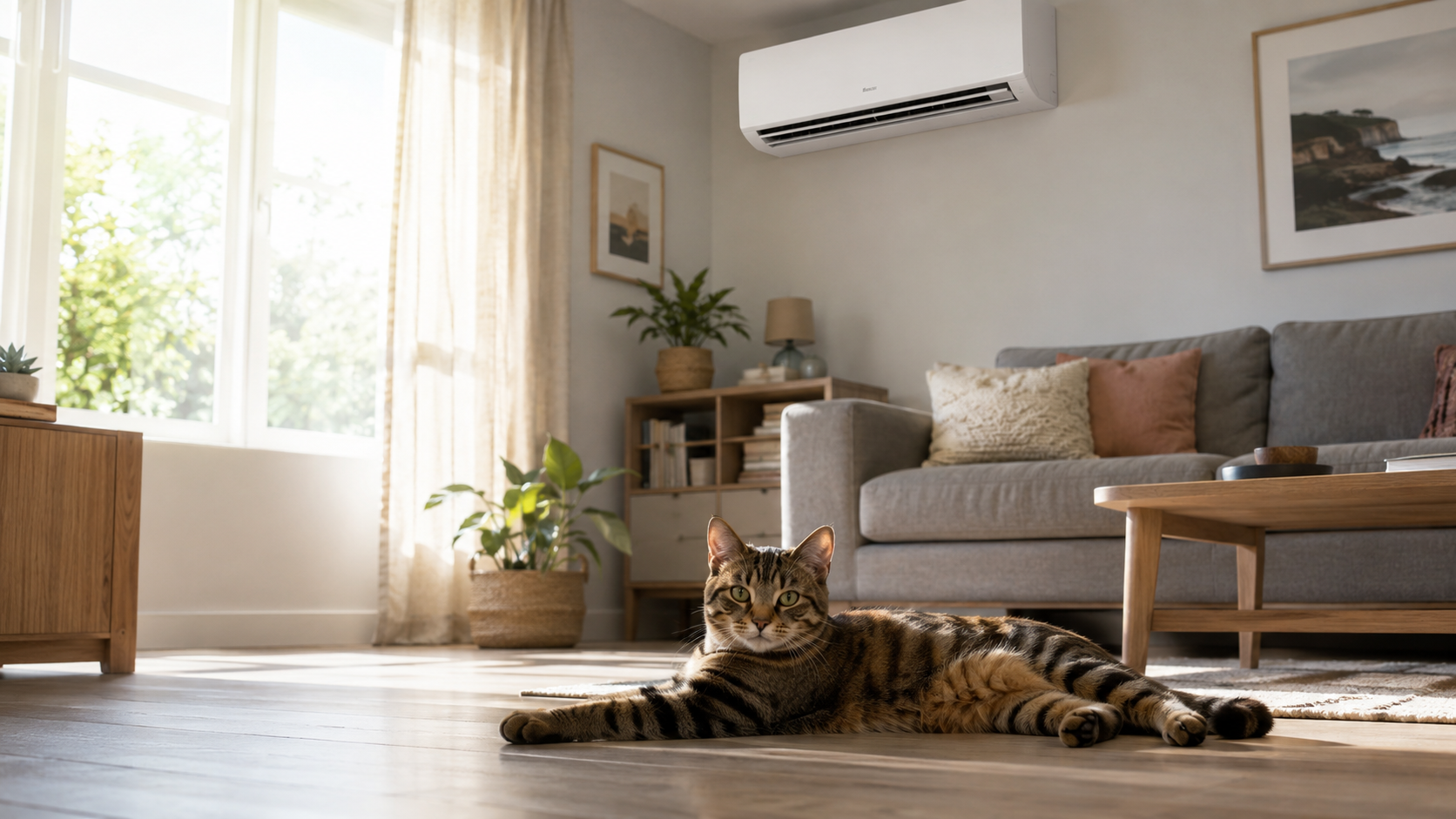
The three brands account for about 70% of UK domestic installs. All three are safe choices. But they are not the same, and the right one depends on what you care about most.
The short answer
- Daikin if you want the safest choice and do not mind paying more.
- Mitsubishi Electric if bedroom silence is the top priority.
- Panasonic if you want 90% of the experience at 80% of the price.
Everyone else - Fujitsu, LG, MHI, Toshiba - is a fine choice too, but this article is about the top three by UK market share.
Head to head - the numbers that matter
Noise on low fan (2.5 kW indoor head)
- Daikin Perfera: 19 dB
- Mitsubishi Electric MSZ-LN: 18 dB
- Panasonic Etherea: 20 dB
All three are quieter than a fridge. The 1-2 dB gaps only matter in a silent bedroom late at night.
Heating coefficient of performance at 7 degrees outside
- Daikin: 4.6
- Mitsubishi Electric: 4.5
- Panasonic: 4.4
Effectively the same. All three deliver about £3.50 of heat for every £1 of electricity in mild UK weather.
Heating COP at 0 degrees outside
- Daikin: 3.2
- Mitsubishi Electric: 3.3
- Panasonic: 3.0
Small gap. Only matters if you plan to use the unit as primary heating in December.
Fitted price (single 2.5 kW indoor head, standard install)
- Daikin Perfera: £2,200 to £2,700
- Mitsubishi Electric MSZ-LN: £2,000 to £2,500
- Panasonic Etherea: £1,700 to £2,100
Panasonic is £400 to £600 cheaper for a near-identical spec.
Warranty
- Daikin: 5 years standard, 7 years if installer registers with Daikin D1 network
- Mitsubishi Electric: 5 years standard, 7 years through the Approved Installer scheme
- Panasonic: 5 years standard, 7 years with online registration by installer within 30 days
All three effectively give 7 years if you use a serious installer.
What each brand does best
Daikin: everything, competently. Nothing about a Daikin surprises you. The controllers are logical, the service network is the biggest in the UK, and every commercial installer we work with can source parts within 48 hours. If you buy a Daikin you spend the next 12 years not thinking about it. The premium buys peace of mind more than raw spec.
Mitsubishi Electric: bedroom-optimised. The MSZ-LN range has the widest low-fan louvre in the market - the cold air spreads at ceiling height instead of blowing down onto you. Combined with a plasma quad filter that catches dust and pollen, this is the unit you buy for a light sleeper, an asthma sufferer, or a bedroom shared with a child.
Panasonic: same core tech, cheaper badge. Panasonic makes compressors for other brands, has full UK service coverage, and matches Daikin on the core numbers. What you sacrifice is the “premium finish” - the indoor head is a couple of millimetres thicker, the controller has one fewer button. Nothing that affects how it performs.
Where Panasonic wins
Two situations where Panasonic is the correct answer even if budget is not tight:
- Multi-split installs. Panasonic multi-splits pair better with a wider range of head types than the Daikin or Mitsubishi Electric equivalents. Better for a house that needs a floor unit in the lounge and wall units in bedrooms.
- Landlord and rental installs. Cheaper upfront, same performance, easier to explain to a tenant. Landlords who install air con on rented properties overwhelmingly specify Panasonic.
Where Daikin wins
Two situations where the premium is worth it:
- Whole-life ownership. If you plan to be in the house for 15+ years, Daikin’s service network reliability starts to matter. Parts availability in year 12 is better than the alternatives.
- Resale value. Estate agents and surveyors know the Daikin badge. It shows on property listings as a feature. Mitsubishi Electric matches this in higher-end areas.
Where Mitsubishi Electric wins
One situation, one answer:
- Sleep-first installs. Bedroom units where the fan runs all night. The MSZ-LN is measurably better than the alternatives at not waking a light sleeper. Not because it is quieter overall but because the air spreads across the ceiling instead of drifting down.
What we would not stress about
- Refrigerant type. All three use R32 in 2026. Same environmental profile.
- Smart controls. All three have decent apps. None are exceptional. Physical remote or thermostat still beats the app for daily use.
- Aesthetic. Preferences differ. Look at them in a showroom, do not read reviews.
The install matters more than the brand
Repeat from every previous post: install quality drives long-term satisfaction more than the badge on the front. A Panasonic fitted well beats a Daikin fitted badly, every time. Every installer on our network is F-Gas certified and personally checked.
Get three quotes to compare
Fill in the quote form and mention brand preference in the comments if you have one. Installers will quote all three if you ask them to, so you can compare like-for-like specs at like-for-like install prices.
Or check the prices page for a rough bracket first.
Ready for a real quote?
Get up to 3 fixed prices from vetted North West installers.
More on Guides
Air conditioning for a garden room or garden office
Garden rooms cook in August and freeze by November. One split system handles both jobs. How to size it, what the electrics need, where the condenser goes, and what a garden room install costs in 2026.
Air conditioning in a flat: what leaseholders need to know
Flats overheat worse than houses and carry the tightest rules on fitting cooling. Here is what your lease says, where the condenser can go, what freeholder consent costs, and the options when there is no outdoor space at all.
What temperature should you set your air conditioning?
Setting 16C does not cool a room any faster, and it costs you for the privilege. Here is the setpoint that works in a UK summer, what each degree adds to the bill, and when dry mode beats cool mode.